Etna from Giardini Naxos: Tours, Prices and Options
Your complete guide to reaching Europe's largest active volcano from the Ionian coast
How can you visit Mount Etna from Giardini Naxos?
To join an Etna Explore private excursion from Taormina or Giardini Naxos, reach the mountain meeting point in your own rental car. Check the exact location on your chosen tour page before leaving: different routes use different starting points. Etna Explore does not arrange transfers. For an independent visit to the south side, you can check public transport via Catania to Rifugio Sapienza, including the outbound and return connections. Giardini Naxos is one of the closest coastal resorts to Etna's north flank, which makes it a strategic base for travellers who prefer a quieter, less crowded approach to the volcano. With Etna Explore every excursion is private and priced per group: from 250€ per group for the Monti Sartorius walk to 500€ per group for the summit craters trek, plus cable car or 4x4 tickets per person where the route uses them. The meeting point is on the mountain (Piano Provenzana on the north side, Rifugio Sapienza on the south side); you must reach the mountain meeting point independently in your own rental car; Etna Explore does not arrange transfers. According to UNESCO, Etna is one of the most documented volcanoes on Earth, and visiting it with a licensed guide is the safest and most informative way to experience it. Destination overview: UNESCO.
How far is Mount Etna from Giardini Naxos?
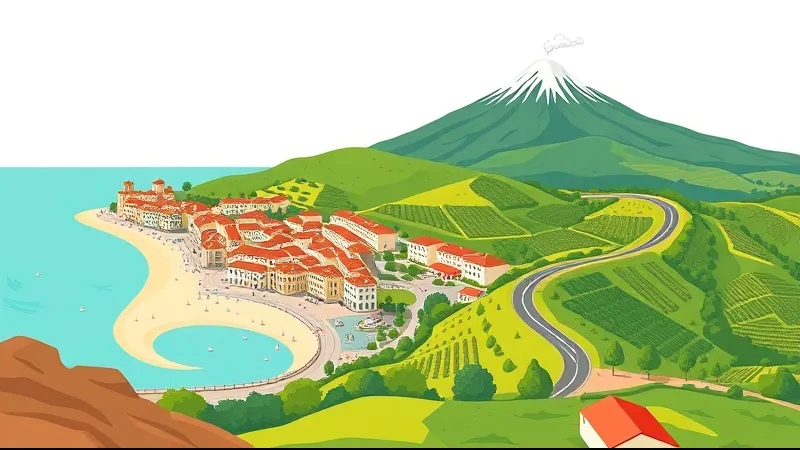
Giardini Naxos lies on the Ionian coast, with the summit craters of Etna rising inland to the west — close enough that the summit is often visible on clear days. The two main visitor access hubs differ noticeably:
- Piano Provenzana (Etna Nord, ~1,810 m) — the north-side base, reached via Linguaglossa and the Mareneve road. Geographically, this is the closest authorised access point to Giardini Naxos.
- Rifugio Sapienza (Etna Sud, ~1,910 m) — the south-side base, reached via Zafferana Etnea or Nicolosi. Farther from Giardini Naxos but home to the cable car (Funivia dell'Etna).
The summit craters themselves rise to approximately 3,400 m — Etna's height changes slightly year by year as new cones grow and collapse, and is continuously monitored by the INGV-Osservatorio Etneo. The north flank's proximity makes Etna Nord the natural choice for anyone basing themselves in Giardini Naxos, especially if avoiding traffic through Catania is a priority.
What are the main tour options from Giardini Naxos?
With Etna Explore the choice from Giardini Naxos is simple: three private excursions, one price per group, a certified Alpine and Volcanological Guide on every one. Choosing between them depends on fitness level and how high on the volcano you want to go.
- Summit craters trek — north side, from Piano Provenzana: 4x4 bus to 2,900 m, then on foot to the summit crater zone, as high as the ordinances in force allow. 5 hours, from 12 years old. 500€ per group (up to 6) + 50€ per person for the 4x4.
- Etna 3000: cable car + 4x4 — south side, from Rifugio Sapienza: cable car to 2,500 m, 4x4 bus to about 2,900 m and a guided walk of about 1 hour 30 minutes. The excursion lasts about 3 hours in total and is open from 6 years old. 300€ per group (up to 6) + 82€ per person for the tickets.
- Monti Sartorius family walk — north-east side, near Rifugio Citelli: an easy loop through the birch forest and the 1865 craters, at a gentle pace. From 1 to 3 hours, depending on how much you want to walk, from 5 years old. 250€ per group (up to 6).
Only authorised Alpine and Volcanological Guides, listed on the register of the Collegio Regionale delle Guide Alpine e Vulcanologiche Siciliane, can legally accompany visitors into the summit area, beyond the limit set by the ordinances in force. Booking with non-certified operators for the summit area is both illegal and unsafe.
How much does an Etna tour from Giardini Naxos cost?
Our prices are per private group, not per person, so the cost per head drops as your party grows:
- Summit craters trek (5 hours): 500€ per group, up to 6 people, + 50€ per person for the 4x4 round trip
- Etna 3000 cable car + 4x4 (3 hours): 300€ per group, up to 6 people, + 82€ per person for cable car and 4x4 tickets
- Monti Sartorius family walk (1–3 hours): 250€ per group, up to 6 people
The Funivia dell'Etna cable-car round-trip ticket is set at 54€ (or 82€ for the combined cable car + 4x4 round trip up to ~2,900 m), according to the official funiviaetna.com site, and is almost always charged separately from the tour fee. The price includes volcanological guiding. A helmet is included only on the summit craters tour. Other equipment and clothing are not included; arrange any rentals independently on site. Cable car and 4x4 tickets are not included in the private guide price. Where required by the route, they are paid separately on site per person.
Is the north or south side of Etna better from Giardini Naxos?
For travellers based in Giardini Naxos, the question of Etna Nord vs Etna Sud has a fairly clear answer, but each side offers a distinct experience.
Etna Nord — Piano Provenzana (1,810 m) is the geographically closest authorised hub. It is significantly less crowded than the south side, surrounded by dense pine forests, and offers access to the dramatic 2002 lava flow that swept through the Piano Provenzana tourist station. From here, certified guides lead routes towards the Pizzi Deneri Volcanological Observatory at ~2,800 m and onward to the summit region.
Etna Sud — Rifugio Sapienza (1,910 m) is more developed: it hosts the Funivia dell'Etna cable car, large parking areas, restaurants, and the easily walkable Silvestri craters. It is closer to Catania and therefore more crowded, especially in high season.
Check official restrictions for the area and date as well as weather and ground conditions. An INGV bulletin describes volcanic activity; it does not itself authorise access. A lower altitude, open lift or previous visitor’s itinerary does not establish that your intended route is open.
Can you reach Mount Etna by public transport from Giardini Naxos?
Public transport to Etna from Giardini Naxos is possible but limited and time-consuming. The realistic route involves three legs:
- Check the transport operator’s direct connections between your departure point and Catania; do not assume a detour via Taormina is necessary.
- Confirm the connection to the AST service and the return timetable before buying separate tickets.
- For an independent visit to the south side, check the AST Catania–Etna service for your date, including operating days, outbound and return times and the current fare. From the coast, allow for the connection in Catania. Reaching Rifugio Sapienza by bus does not guarantee arrival in time for a private tour, and it does not reach the north-side meeting points.
A rental car gives flexibility to reach the specified north- or south-side meeting point. Independent visitors can also investigate taxis or transfers from third parties, checking route, return and cost. Our private excursions require you to reach the meeting point in your rental car; Etna Explore does not arrange transport.
What altitude can you reach on Mount Etna without a guide?
Access regulations on Etna are enforced by the Ente Parco dell'Etna and adjust dynamically based on INGV-OE volcanic activity reports.
- Check official restrictions for the area and date as well as weather and ground conditions. An INGV bulletin describes volcanic activity; it does not itself authorise access. A lower altitude, open lift or previous visitor’s itinerary does not establish that your intended route is open.
- On Etna Nord: the same limit applies to unaccompanied visitors.
- In the summit area — including the Torre del Filosofo area (~2,920 m) and the summit craters (3,400 m) — a certified Alpine and Volcanological Guide is required under the ordinances in force.
The rule exists because the upper volcano can change rapidly: sudden ash emissions, gas plumes and unstable terrain make professional guidance essential. Fines for unauthorised solo trekking above the threshold are significant, and rescue costs in case of accident are entirely the trekker's responsibility.
What should you wear and bring for an Etna tour?
Even in midsummer, conditions at altitude are completely different from the coast. Temperatures at 3,000 m can be 20°C colder than in Giardini Naxos, with strong winds and intense ultraviolet radiation. The Club Alpino Italiano (CAI) recommends a layered approach to alpine clothing, which applies fully to Etna.
- Layered clothing — base layer, fleece, windproof shell.
- Sturdy closed hiking shoes — sneakers are not safe on volcanic gravel and lava.
- Windproof and water-resistant jacket.
- Sunglasses — essential against UV at altitude and airborne lava ash.
- Sunscreen (SPF 30+).
- Water — at least 1.5 litres per person.
- Snacks — nuts, energy bars, fruit.
The price includes volcanological guiding. A helmet is included only on the summit craters tour. Other equipment and clothing are not included; arrange any rentals independently on site.
When is the best time of year to visit Etna from Giardini Naxos?
Etna can be visited year-round, but each season offers a distinct character.
- Spring (April–June): wildflowers across the slopes, mild temperatures, residual snow patches at altitude. Excellent visibility on clear days.
- Summer (July–August): the busiest period. Hot at the coast but pleasantly cool at the summit. All infrastructure — cable car, refuges, restaurants — is fully operational.
- Autumn (September–October): arguably the best hiking conditions, with stable weather and few crowds. Coincides with the grape and chestnut harvests on Etna's lower slopes.
- Winter access and lift operation depend on snow, weather, maintenance and restrictions. Do not assume the ski facilities are operating because the date falls in winter.
Regardless of season, Etna is an active volcano, and eruption episodes are unpredictable. The visitor experience can change overnight based on lava flow position, ash fall or summit closures.
Is Mount Etna safe to visit with current volcanic activity?
Etna is one of the most closely monitored volcanoes in the world. The INGV-Osservatorio Etneo operates a 24/7 monitoring network combining seismic stations, GPS deformation sensors, thermal cameras and gas analysers. When activity intensifies — for example during paroxysmal episodes — the Protezione Civile and the Parco dell'Etna issue temporary access restrictions, sometimes lowering the maximum allowed altitude or closing specific sectors.
A guide combines official information with the assessment of the route, weather and group. Do not assume direct contact with monitoring institutions or guaranteed advance warning of changes.
Frequently Asked Questions
Can I see Etna lava from Giardini Naxos?
Yes — during night-time eruptions, lava fountains and active flows are often clearly visible from the Giardini Naxos seafront, especially when activity occurs on the eastern or south-eastern flank. The sight is particularly dramatic after sunset, with the glowing summit standing out against the dark sky.
Do tours from Giardini Naxos include hotel pickup?
Our excursions meet on the mountain — Piano Provenzana on the north side, the Rifugio Sapienza cable car station on the south side. You must reach the mountain meeting point independently in your own rental car; Etna Explore does not arrange transfers.
Is the cable car ticket included in tour prices?
Usually not. The 54€ Funivia dell'Etna cable-car round-trip ticket (82€ including the 4x4 shuttle to ~2,900 m) is almost always charged separately and added on the day of the tour. Check the inclusions list carefully before confirming a booking.
Can children go on Etna tours?
Yes — on the easier excursions: the Monti Sartorius walk from 5 years old, the Etna 3000 cable car + 4x4 tour from 6. The summit craters trek requires a minimum age of 12, due to the physical demands and exposure.
Do I need travel insurance for Etna?
Personal insurance is not included in the price of our excursions and is not mandatory to book or participate. This condition applies to our offers; other operators may have different requirements.
Sources and References
- INGV — Istituto Nazionale di Geofisica e Vulcanologia, Osservatorio Etneo — volcanic monitoring and summit altitude data.
- Ente Parco dell'Etna — access regulations and protected area rules.
- UNESCO World Heritage — Mount Etna (site 1427) — recognition and natural significance.
- Funivia dell'Etna — official cable car operator and pricing.
- Collegio Regionale delle Guide Alpine e Vulcanologiche Siciliane — official register of authorised guides.
- Protezione Civile Regione Siciliana — safety alerts and emergency updates.
- Club Alpino Italiano (CAI) — mountain safety and gear recommendations.
- Comune di Giardini Naxos — Tourism Office — local logistics and transport information.
Before You Book: Quick Planning Checklist
- Check updated weather and volcanic activity conditions for your travel dates.
- Confirm meeting point, start time, and transfer duration.
- Compare routes, practical details and availability, then use the booking calendar on your chosen tour page.
- Read local safety guidance before excursions.