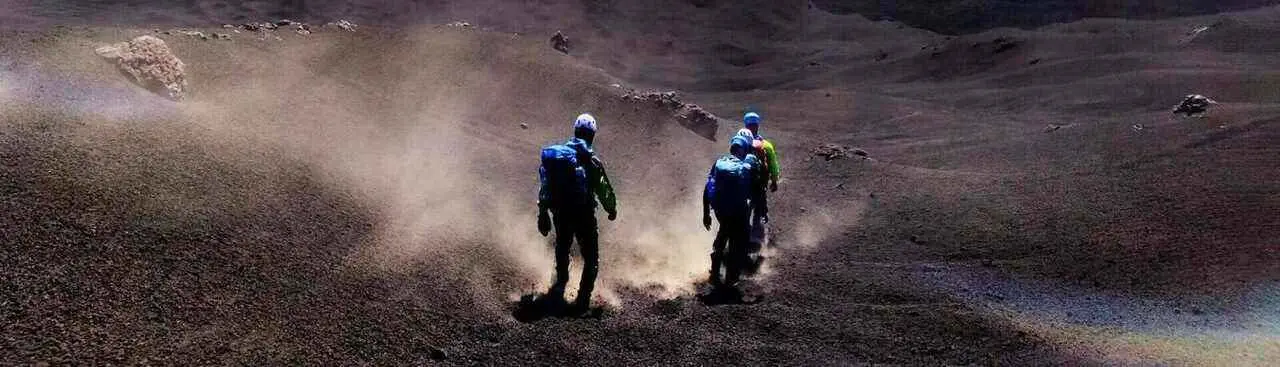
What to Wear on Mount Etna: Season-by-Season Clothing Guide
From summer sun to winter snow: exactly what to wear and pack for every type of Etna excursion, in every season.
Table of Contents
Mount Etna rises from sea level to 3,357 metres. The temperature drops roughly 6-7 degrees for every 1,000 metres of altitude gained. This means that even on a scorching Sicilian summer day, the summit can be cold, windy, and covered in clouds. Proper clothing is not optional — it is essential for safety and comfort.
1. The Layering System: Your Best Friend
The golden rule on Etna is layers, layers, layers. Conditions change rapidly as you climb, and the layering system lets you add or remove clothing as needed.
The Three-Layer Rule
- Base layer: Moisture-wicking synthetic or merino wool. Avoid cotton — it gets cold and heavy when wet with sweat.
- Mid layer: Fleece or light softshell for insulation. A zip-front fleece is ideal because you can open it when climbing and close it at stops.
- Outer layer: Windproof and water-resistant jacket. It does not need to be heavy, but it must block wind. At altitude, wind chill is the real enemy.
2. Summer (June - September)
Summer is the most popular season for Etna excursions, but do not be fooled by the heat at sea level. At 3,000m+, temperatures can be 15-20 degrees cooler.
What to Wear
- Lightweight moisture-wicking base layer
- Light fleece or softshell jacket
- Windproof outer layer (packable)
- Long hiking trousers (not shorts at altitude)
- Sun hat and sunglasses (UV is intense)
- Sunscreen SPF 50+
Common Mistakes
- Wearing only shorts and a T-shirt
- Flip-flops or sandals (even on jeep tours)
- No windproof layer
- Cotton clothing (gets cold when sweaty)
- No sun protection at altitude
Temperature range at summit level: 5-15 degrees Celsius on a typical summer day. Can drop below 5 degrees with wind.
3. Shoulder Season (April-May, October)
Shoulder season offers fewer crowds and beautiful autumn/spring colours on Etna's lower slopes. But the temperature range is wider and weather is less predictable.
- Add a warmer fleece or down jacket as mid layer
- Thermal base layer recommended for early morning departures
- Waterproof jacket essential (not just windproof)
- Warm hat and gloves for summit-level excursions
- Temperature at summit: 0-10 degrees Celsius. Can snow in October.
4. Winter (November - March)
Etna becomes a snow-covered mountain in winter. Some excursions still operate, but the summit is often inaccessible. Lower-altitude hikes and snowshoe tours are common.
Winter Essentials
- Thermal base layer (merino wool preferred)
- Heavy insulating layer (down jacket or thick fleece)
- Waterproof and windproof outer shell
- Warm hat, neck gaiter, insulated gloves
- Waterproof hiking boots (insulated if possible)
- Gaiters for deep snow
Temperature at 2,000m+: -5 to 5 degrees Celsius. Wind chill can make it feel like -15. Snow is common above 1,800m from December to March.
5. Footwear: The Most Important Item
Your boots are the single most important piece of gear on Etna. The terrain is loose volcanic rock, sharp lava, and steep ash slopes. The wrong footwear can ruin your experience or cause injury.
Footwear Rules
- Ankle support is mandatory. Low-cut trainers or running shoes are not suitable for most Etna hikes.
- Thick soles protect against sharp lava rocks. Trail running shoes are not enough for summit treks.
- Waterproof is ideal but not always essential in summer.
- Already broken in. Do not hike Etna in brand-new boots. Blisters at altitude are miserable.
If you do not have proper hiking boots, some guided tours include boot rental (check when booking).
6. Quick Checklist by Tour Type
| Item | Summit Trek | Cable Car Tour | Jeep Tour | Wine Tour |
|---|---|---|---|---|
| Hiking boots | Essential | Essential | Recommended | Not needed |
| Windproof jacket | Essential | Essential | Recommended | Light jacket |
| Warm fleece | Essential | Essential | Recommended | Not needed |
| Sun protection | Essential | Essential | Essential | Recommended |
| Long trousers | Essential | Essential | Recommended | Optional |
| Water (1.5L+) | Essential | Recommended | Recommended | Optional |
Before You Book: Quick Planning Checklist
- Check updated weather and volcanic activity conditions for your travel dates.
- Confirm meeting point, start time, and transfer duration.
- Request availability early for your preferred date and route.
- Read local safety guidance before excursions.