How to Get to Etna from Catania: All the Ways
Public bus, rental car, private transfer or guided tour — the four practical routes from Catania to the volcano's two main gateways.
How do you get to Etna from Catania?
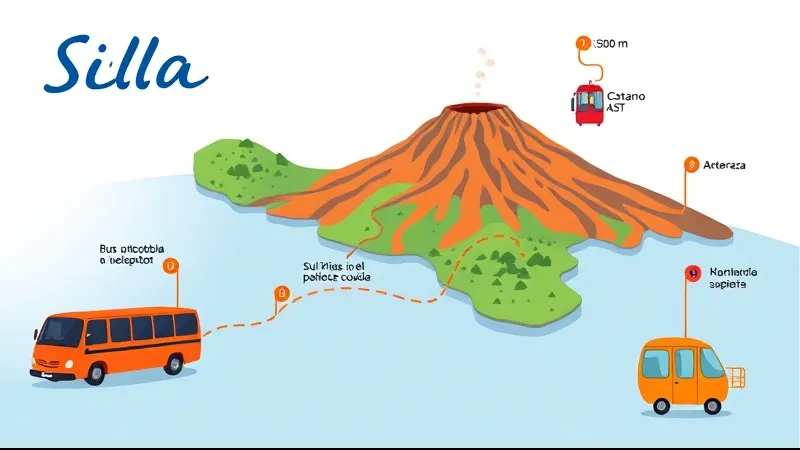
From Catania there are four practical ways to reach Mount Etna: a rental car, the AST public bus, a private transfer, or an organised tour. Each arrives at one of the volcano's two tourist gateways — the Rifugio Sapienza on the south side (1,900 m, the base of the Etna cable car) or Piano Provenzana on the north side (about 1,800 m). The AST bus and most day tours go to the south side; a rental car reaches both.
In short: take the AST bus if you want the cheapest option and have no car; rent a car for full freedom over your timing; book a private transfer for groups; join a guided tour if you plan to go high on the volcano, where a certified guide is required. The summit crater area — which reaches roughly 3,400 m — can, in accordance with the ordinances in force, only be visited with an authorised Alpine and Volcanological Guide, so your choice of transport is really a choice about how high, and how, you want to go.
The rest of this guide breaks down each option, the altitudes involved, the cable car, and what to check before you set off, so you can match the route to the kind of trip you're planning.
What are the main access points to Etna?
Etna has two main tourist gateways, and nearly every option from Catania points to the first one. The south side centres on the Rifugio Sapienza (1,900 m), the base station of the Funivia dell'Etna cable car and the busiest arrival point on the mountain. The north side centres on Piano Provenzana (about 1,800 m), a smaller, quieter hub above the forests of Linguaglossa.
The south side is the default from Catania: the road is well served, parking sits right at the base, and the cable car and jeep infrastructure start here. Piano Provenzana feels different — it sits below the black, still-bare slopes reshaped by the 2002 eruption, which destroyed much of the earlier tourist station and the pine woods around it. You can still see the raw lava fields and rebuilt facilities today. Reaching the north side without your own car is difficult, which is why most public transport and tours from Catania head south.
Both gateways sit inside a protected area managed by the Ente Parco dell'Etna. Before choosing a side, it's worth checking the Parco dell'Etna website for access notes and the seasonal state of the trails and roads.
Is there a public bus from Catania to Etna?
Yes — there is one direct public bus. The AST bus leaves from Catania at Piazza Papa Giovanni XXIII, right in front of the central train station, and climbs to the Rifugio Sapienza (1,900 m) on the south side. It is the only scheduled public service that goes directly onto the volcano, and it runs with a single morning departure up and a single afternoon return down.
For an independent visit to the south side, check the AST Catania–Etna service for your date, including operating days, outbound and return times and the current fare. From the coast, allow for the connection in Catania. Reaching Rifugio Sapienza by bus does not guarantee arrival in time for a private tour, and it does not reach the north-side meeting points.
Timetables and fares change with the season, so always confirm the current schedule and price directly on the official AST (Azienda Siciliana Trasporti) website before you plan around it. Turning up at the stop without checking is the most common way visitors miss the only bus of the day.
Is renting a car worth it for going up Etna?
A rental car gives flexibility to reach the specified north- or south-side meeting point. Independent visitors can also investigate taxis or transfers from third parties, checking route, return and cost. Our private excursions require you to reach the meeting point in your rental car; Etna Explore does not arrange transport.
The real advantage is timing. The single AST bus locks you into a mid-morning arrival and an afternoon return; a car lets you set your own hours. That matters most for the parts of the day the bus can't cover — arriving early for the cool, clear air before the crowds, or staying for the light at the end of the day. The SP92 is a normal paved mountain road, well within the reach of any standard car, though it can be affected by snow or ash in some seasons, which is one more reason to check conditions before you drive up.
If you're travelling as a family or want to combine the volcano with nearby villages like Nicolosi, Zafferana Etnea or the wine estates on the lower slopes, the car turns a single mountain trip into a flexible day.
Guided tour or DIY: which is better for Etna?
It depends on how high you want to go. For the lower areas around 1,900–2,000 m, doing it yourself is perfectly reasonable. But for the summit crater zone, an authorised guide is mandatory under the ordinances in force — this is a legal obligation on Etna, not a suggestion, and it exists because the upper volcano is an active, changing environment with unstable ground, sudden weather and gas.
The price includes volcanological guiding. A helmet is included only on the summit craters tour. Other equipment and clothing are not included; arrange any rentals independently on site. Reach the mountain meeting point specified on your tour page independently in your own rental car. We do not provide transfers or hotel pick-up.
This is the terrain the Etna Explore guides work on every day as certified Alpine and Volcanological Guides. From experience on the upper south flank: on the loose scoria above the cable car top station the ground doesn't crunch so much as shift underfoot, each step sinking and sliding half a pace back, and there's a warm, faintly metallic sulfur smell that catches at the back of the throat near the active vents — stronger some days than others depending on the wind. Groups usually pause behind the low ridges of older cones to get out of the wind before the final stretch, because the exposed sections can be cold and gusty even when the base was warm. None of that is visible from a car park; it's the difference the guided section adds. In Sicily, the licensed profession is regulated — the authorities are the Guide Alpine e Vulcanologiche della Sicilia.
Can you reach Etna directly from Catania airport?
Yes. Catania–Fontanarossa (CTA) is the main hub of eastern Sicily, and there are three ways to move from the terminal towards the volcano. You can take a direct private transfer to the Rifugio Sapienza, rent a car at the airport and drive up the SP92, or take a shuttle bus into the city centre and connect to the single AST bus from Piazza Papa Giovanni XXIII.
There is no scheduled public bus that runs directly from the airport onto the volcano, so the public route always passes through the city centre. That makes timing tight if you rely on the one daily AST departure, because you must land, reach the centre and catch that morning bus. For anyone arriving with a flexible schedule — or landing later in the day — a private transfer or an airport car rental is far more practical. Check current terminal transfers and city-shuttle timetables on the official Catania airport website before you travel.
How high does the Etna cable car go?
The Funivia dell'Etna cable car climbs from the Rifugio Sapienza (1,900 m) to a top station at about 2,500 m. From there, specially equipped 4x4 vehicles continue with a guide up to roughly 2,900 m, the highest point reached by organised transport. Above that, movement towards the summit craters — which reach approximately 3,400 m — is on foot and, as noted, only with an authorised guide.
On pricing, the cable car round-trip ticket is 54 €. The combined option — cable car plus the 4x4 jeep round trip up to around 2,900 m — is 82 €. These fares cover transport only and are separate from any guiding fee for the summit area. Prices and opening hours vary by season and with volcanic activity, so confirm the current tariff on the official Funivia dell'Etna website before you go.
How to choose the right option for your trip
The right transport depends on your budget, your group and how high you want to go. Use this quick decision guide.
- AST public bus — best for budget travellers and anyone without a car. Goes to Rifugio Sapienza (1,900 m) only, on a single morning-up, afternoon-down schedule.
- Rental car — best for families and full freedom over timing. Reaches both Rifugio Sapienza and Piano Provenzana, with parking at each base, and covers the early and late hours the bus can't.
- Organised tour — best for safety at altitude and for entering the summit zone, where a certified guide is required under the ordinances in force. The natural choice for a proper summit-area experience.
- Private transfer — best for groups who want a direct door-to-base ride from Catania or the airport without driving themselves.
A simple way to decide: if the summit zone is your goal, the transport question is secondary — you'll need a guide regardless, so pick whatever gets you comfortably to the base. If you only want the 1,900–2,500 m area, choose on cost and flexibility.
What to know before going up Etna from Catania
Two things matter most before you set off: dress in layers and check the volcano's activity and the seasonal timetables. Even in summer it is cold and windy at 2,500–2,900 m, often ten or more degrees colder than in Catania, so bring a warm layer and a windproof shell whatever the city thermometer says.
- Layered clothing: a base layer, a warm mid-layer and a windproof jacket. Conditions at the base tell you little about the exposed upper slopes.
- Proper footwear: closed trekking shoes with grip. The volcanic scoria is loose and abrasive, and sandals or smooth soles slide on it.
- Sun and eye protection: the light is strong at altitude and the dark ground reflects heat; sunglasses and sunscreen help.
- Check volcanic activity first: Etna is active, and access to the upper slopes can change quickly. Read the official INGV – Osservatorio Etneo bulletin before you plan your day.
- Confirm seasonal timetables: the AST bus and the cable car both change hours with the season and may pause during adverse weather or heightened activity. Verify both before you rely on them.
These checks help organise the visit, but weather, access and transport can still change. Leave a realistic margin and follow current instructions.
Frequently asked questions
Is there really only one bus a day to Etna?
Yes. The AST public bus runs a single morning departure from Catania up to the Rifugio Sapienza and a single afternoon return. There is no second service and no evening run, so your day is built around that one timetable.
What altitude is the Rifugio Sapienza?
The Rifugio Sapienza sits at 1,900 m on the south side of Etna and is the base station of the cable car. It is the main arrival point for the AST bus and most tours from Catania.
Do you need a guide for the summit craters?
Yes. In the summit crater area — which reaches about 3,400 m — an authorised Alpine and Volcanological Guide is mandatory under the ordinances in force. It is a legal requirement, not a recommendation.
Can you go up Etna in winter?
Yes, but conditions change completely: snow, ice and shorter cable car hours are normal, and access to the upper slopes may be limited. Winter visits need proper equipment and, for the higher zones, a guide.
Is the cable car always open?
No. The Funivia dell'Etna can close for strong wind, snow or heightened volcanic activity, and its hours shift with the season. Always check the official Funivia dell'Etna site before going.
North side or south side from Catania?
From Catania the south side (Rifugio Sapienza) is the practical default: it's better served by transport and has the cable car. Piano Provenzana on the north side is quieter but really needs your own car to reach.
Are there trains to Etna (Ferrovia Circumetnea)?
Ferrovia Circumetnea serves towns around Etna’s lower slopes, not the high mountain meeting points. Check the current route and timetable: replacement bus services mean it should not be described as a guaranteed continuous railway circuit. Plan the onward journey separately.
Is it dangerous to go up Etna?
Etna is an active volcano. Preparation, qualified guiding and compliance with restrictions help manage risk but do not eliminate it or guarantee safety. Route decisions require updated information and assessment of the actual conditions.
Plan your route up the volcano
Once you know whether you're heading for the base or the summit zone, the practical questions are which side, which season and how high you can comfortably go. If you'd like help matching the route and altitude to your own fitness and timing — especially for the guided summit section — write to the Etna Explore guides to talk through the options before you book your transport.
Staying in Taormina rather than Catania? The logistics change — the volcano's north side becomes your closest gateway. See our guide on how to visit Etna from Taormina.
Sources and official references
- INGV – Osservatorio Etneo — volcanic activity monitoring and bulletins
- Ente Parco dell'Etna — protected area, access and trails
- UNESCO World Heritage — Mount Etna (inscribed 2013)
- AST – Azienda Siciliana Trasporti — public bus timetables and fares
- Funivia dell'Etna — cable car tariffs and altitudes
- Catania–Fontanarossa Airport (CTA) — transfers and connections
- Ferrovia Circumetnea — narrow-gauge railway around the volcano
- Guide Alpine e Vulcanologiche della Sicilia — licensed guiding authority
Before You Book: Quick Planning Checklist
- Check updated weather and volcanic activity conditions for your travel dates.
- Confirm meeting point, start time, and transfer duration.
- Compare routes, practical details and availability, then use the booking calendar on your chosen tour page.
- Read local safety guidance before excursions.