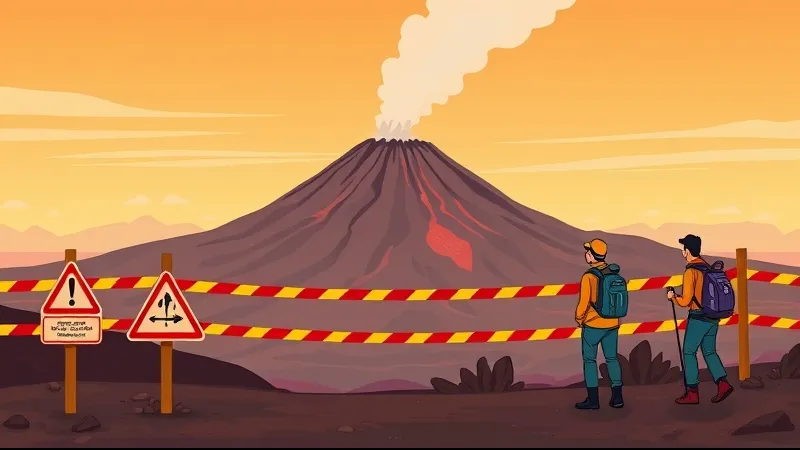
Etna Eruption & Access Restrictions 2026: What Visitors Need to Know
The Christmas Eve eruption, new safety rules, guide strikes, and what it all means for your Etna tour this year.
Table of Contents
Mount Etna began a significant eruption cycle on Christmas Eve 2025 that led to new safety restrictions, lava-viewing bans, and the first guide strike in decades. If you are planning to visit Etna in 2026, here is what actually changed, what remains open, and how to plan around the current situation.
1. What Happened on Christmas Eve 2025
On 24 December 2025, Mount Etna entered a new eruptive phase with lava flowing from the Southeast Crater — the most active vent in recent years. The eruption was not explosive in the traditional sense, but it produced sustained lava flows that advanced down the southeastern flank.
The most advanced lava front reached approximately 1,360 metres above sea level before cooling and stopping after travelling roughly 3 kilometres. This is significant because it brought active lava to altitudes where guided excursions and lava-viewing tours normally operate.
Italy's National Institute of Geophysics and Volcanology (INGV) confirmed that the eruption posed no danger to residential areas. However, the proximity of lava to accessible hiking zones prompted local authorities to act quickly with new restrictions.
2. Current Access Restrictions
The city of Catania and Civil Protection authorities imposed stricter rules for Etna excursions following the eruption. The key restrictions include:
- 200-metre exclusion zone — Visitors must stay at least 200 metres from any active lava flow
- Dusk curfew — All excursions must end before sunset; no night-time lava viewing permitted
- Group size enforcement — The existing 10-person maximum per group is now strictly enforced, including drone surveillance
- Altitude cap at ~2,850m — The summit crater zone above approximately 2,850 metres remains closed by Civil Protection order
- Forestry police deployment — Officers and drones monitor compliance in the field
Important: Restrictions Change Frequently
These rules evolve as volcanic activity changes. The altitude cap can be raised or lowered within hours based on INGV assessments. Always check with your guide or tour operator on the day of your visit for the most current access limits.
3. The Guide Strike and What It Means
In January 2026, licensed Etna guides went on strike for the first time in decades. Dozens of certified Alpine and Volcanological Guides demonstrated in front of the lava-flow access gates, calling the new restrictions excessive.
The guides' position is straightforward: lava-front excursions have been conducted safely for years under professional supervision. The new rules — particularly the 200-metre exclusion and the dusk curfew — effectively eliminate the most popular experience on Etna: watching lava flow at close range in the evening light.
The scientific community largely supports the guides. INGV volcanologists confirmed that the lava fronts pose no danger to hikers when accompanied by certified professionals. The debate centres on the balance between precautionary regulation and the economic viability of volcano tourism.
For visitors, the strike itself had limited direct impact — most tour operators continued running adapted programmes. The real consequence is the restriction set, which remains in force regardless of the strike outcome.
4. Can You Still Visit Etna in 2026?
Yes, absolutely. Mount Etna remains fully open to visitors. The restrictions affect specific zones and altitudes, not the mountain as a whole. Here is what is available:
- Guided hiking up to the current altitude limit (~2,850m) with a licensed guide
- The cable car and 4x4 service from Rifugio Sapienza (south side)
- 4x4 Jeep tours on both north and south flanks
- Trekking on the north side from Piano Provenzana
- Lower-altitude walks including the Monti Sartorius craters
- Wine and food experiences on the slopes
What is currently restricted: access to the summit craters above ~2,850m, night-time excursions to active lava fronts, and close-range lava viewing.
5. Altitude Limits Explained
The altitude cap is the most important restriction for hikers. Here is how it works:
| Zone | Altitude | Access |
|---|---|---|
| Lower slopes | Up to ~1,900m | Free access, no guide required |
| Mid-altitude zone | 1,900m – 2,850m | Open with licensed guide recommended above 2,500m |
| High-altitude zone | 2,850m – 2,920m | Licensed guide required; subject to daily assessment |
| Summit craters | Above ~2,920m | Currently closed by Civil Protection order |
The 2,850m cap means you can still hike well above the cable car station (2,500m) and enjoy panoramic views of the summit area, even if the craters themselves are off-limits. On clear days, you can see volcanic activity from this distance — steam, gas emissions, and sometimes glow from the active vents.
6. Which Tours Are Running?
Most Etna tour programmes are operating with route adjustments. Here is a summary:
- Etna Cable Car 3000 — Running with adjusted maximum altitude. Cable car + 4x4 reach ~2,900m; guided walk proceeds to the daily limit
- Summit Craters Trek — Adapted route to the current altitude cap. The geological experience remains rich even without reaching the crater rim
- Monti Sartorius Walk — Fully operational and unaffected by restrictions
- Jeep tours — Operating normally on both north and south sides
- Private tours — Available with flexible routing adapted to daily conditions
7. How to Prepare for Your Visit
- Book with a licensed guide — Certified guides have real-time information on access changes and can adjust routes on the spot
- Check conditions the day before — Use our weather page and webcam for current visibility and conditions
- Stay flexible — The best Etna experiences in 2026 go to visitors who accept that routes may change and that alternative itineraries can be equally rewarding
- Bring proper gear — Hiking boots, layers, wind protection, water, and sun protection remain essential regardless of altitude reached
- Ask about alternatives — If summit access is restricted on your day, ask your guide about the 2002 eruption craters or north-side options
Frequently Asked Questions
Is Mount Etna dangerous to visit right now?
No. The current eruption is monitored continuously by INGV. Restrictions exist to maintain safety margins, not because of immediate danger. Tens of thousands of visitors safely explore Etna each year during active phases.
Will I see lava?
Possibly. During active phases, you may see lava glow from a distance, steam and gas emissions, and fresh volcanic deposits. Close-range lava viewing is currently restricted.
Should I cancel my Etna tour?
No. The vast majority of tour formats are running. The experience is different from non-eruptive periods — in many ways more impressive. An active volcano with visible emissions is a powerful sight even from regulated distances.
Can I reach the summit craters?
Not currently. The crater zone above ~2,920m is closed by Civil Protection order. This may change as conditions evolve. Your guide will know the daily limit.
Does the eruption affect Catania airport?
Occasionally. Heavy ash emissions can cause temporary flight disruptions at Catania Fontanarossa airport. Check aeroporto.catania.it for real-time status if ash activity is reported.
Bottom Line
The 2026 restrictions are a response to a specific eruption cycle, not a permanent change. Mount Etna remains one of the most accessible active volcanoes in the world. Plan with a licensed guide, stay informed, and embrace the fact that you are visiting a truly living mountain — that is what makes Etna extraordinary.
Before You Book: Quick Planning Checklist
- Check updated weather and volcanic activity conditions for your travel dates.
- Confirm meeting point, start time, and transfer duration.
- Request availability early for your preferred date and route.
- Read local safety guidance before excursions.